-
Courses
Courses
Choosing a course is one of the most important decisions you'll ever make! View our courses and see what our students and lecturers have to say about the courses you are interested in at the links below.
-
University Life
University Life
Each year more than 4,000 choose University of Galway as their University of choice. Find out what life at University of Galway is all about here.
-
About University of Galway
About University of Galway
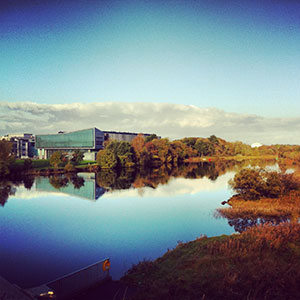
Since 1845, University of Galway has been sharing the highest quality teaching and research with Ireland and the world. Find out what makes our University so special – from our distinguished history to the latest news and campus developments.
-
Colleges & Schools
Colleges & Schools
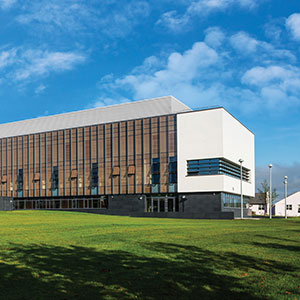
University of Galway has earned international recognition as a research-led university with a commitment to top quality teaching across a range of key areas of expertise.
-
Research & Innovation
Research & Innovation
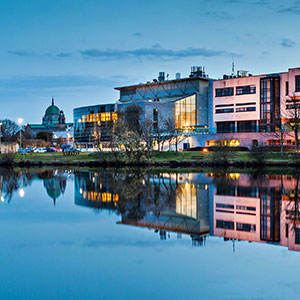
University of Galway’s vibrant research community take on some of the most pressing challenges of our times.
-
Business & Industry
Guiding Breakthrough Research at University of Galway
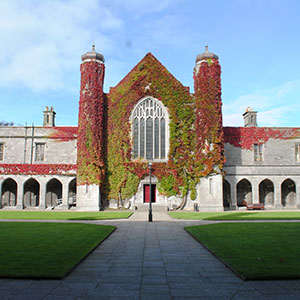
We explore and facilitate commercial opportunities for the research community at University of Galway, as well as facilitating industry partnership.
-
Alumni & Friends
Alumni & Friends
There are 128,000 University of Galway alumni worldwide. Stay connected to your alumni community! Join our social networks and update your details online.
-
Community Engagement
Community Engagement
At University of Galway, we believe that the best learning takes place when you apply what you learn in a real world context. That's why many of our courses include work placements or community projects.
 Accessibility & Language
Exercise Physiology and its Application in Therapy (MSc)
MSc (Exercise Physiology and Its Application in Therapy)
College of Medicine, Nursing & Health Sciences, School of Pharmacy and Medical Sciences- Title of Award
- Master of Science
- Course Code
- MSC-EPT
- Average Intake
- 20-25
- Delivery
- On Campus
- NFQ
- Level 9
- Award Type
- Major
- Next Intake
- September 2026
- Duration
- 1 year, full-time | 2 years, part-time
- ECTS Weighting
- 90
Why Choose This Course?
Course Information
Who is this course for?
The MSc in Exercise Physiology and Its Application in Therapy suits individuals who have an interest in the science of physical activity and would like to develop a career in this area. It is suitable for recent graduates who wish to develop their practical, analytical, research and professional skills, as well as for professionals looking to advance their knowledge and career prospects in this exciting field.
With its strong academic grounding in topics such as kinesiology, cardiorespiratory function, nutrition and cognition, as well as practical training in fitness assessment, dietary analysis and exercise prescription, it offers diverse opportunities for individuals looking to develop and progress in a wide range of careers.
This course welcomes applicants with a degree in Science, Life Science, Biomedical Science, Health Sciences, Nursing or related discipline, with a minimum result of second class honours (2.2).
While students can take this course fully on-campus, it also facilitates students who wish to remain in employment, with online resources and lecture recordings made available. On-campus attendance is mandatory for practical sessions and some assessments however.
What will I study?
The full-time programme runs over 12 months. In the first 2 semesters (September – May), you will have lectures, laboratory sessions and practical workshops in the core modules. From May to August you will complete a research project under the supervision of a Physiology researcher. As well as learning practical skills relevant to the career of an exercise physiologist, the research project provides enhanced opportunities to develop your skills of critical evaluation, as well as your capacity to work within ethical and professional guidelines. You will also learn how to manage and analyse data, and how to present and disseminate your work in various media.
As well as the core modules, you will choose one elective module (to complete either in semester 2 or in the summer period). While the elective modules can vary from year to year, they are designed to provide further career-oriented practical experience in the area of exercise physiology.
Students can also opt to take the course part-time over a period of 24 months, in which case they will take half of the modules each year.
Core modules:
- ET1500 Introduction to Exercise Physiology [10ECTS]
- ET1501 Integrated Physiological Responses to Exercise [10ECTS]
- ET1515 Neurophysiology and Exercise [5ECTS]
- ET1516 Metabolism and Nutrition in Exercise [5ECTS]
- ET1505 Laboratory Methods in Exercise Physiology [10ECTS]
- ET1518 Rehabilitation I: Physiologic Basis of Exercise Testing and Prescription [10ECTS]
- ET1519 Rehabilitation II: Exercise in Population Health and Rehabilitation [10ECTS]
- ET1506 Research Project and Dissertation [25ECTS]
Optional Modules may include*:
- ET1507 Personal Training and Gym Instruction [5ECTS]
- ET1511 Research Methods for Physiotherapists and Healthcare Professionals [5ECTS]
- ET1512 Community-Engaged Learning and Outreach [5ECTS]
*Students choose one 5ECTS optional module. Please note that while these modules have been recently available, they are subject to change.
- Professional career pathways: Opportunities to pursue a career as an exercise physiologist.
- Master core concepts: Develop a solid foundation in scientific principles of exercise physiology and its application in disease conditions.
- Practical training: Get hands-on experience of performing fitness tests, assessment of physiological function, and development of exercise programmes.
- Research skills: Develop skills to evaluate published literature and draw evidence-based conclusions for application in practice.
- Data collection and analysis: Collect data in line with GDPR and data privacy guidelines, and build the ability to analyse data using advanced statistical software.
- Improve communication skills: Learn to effectively present and articulate findings and perspectives using a range of media.
This course is approved by REPS Ireland (Register of Exercise Professionals in Ireland), and upon completion, graduates will be eligible to apply for registration as a Graduate Exercise Professional. Please note that additional criteria may be required for registration, and students are advised to visit the REPS Ireland website for further information https://repsireland.ie/.
Graduates also have an option to pursue certification by the ACSM (American College of Sports Medicine), to qualify as an Exercise Physiologist or Clinical Exercise Physiologist. https://acsm.org/certification/get-certified/exercise-physiologist/. Please note that ACSM certification requires candidates to pass an exam, and clinical experience is required to be eligible to apply for certification as a Clinical Exercise Physiologist. Students are advised to do their own research on this pathway, as requirements and criteria can change from time to time. Staff will offer students support should they wish to prepare for the ACSM exam.
Exercise physiologists work in many settings including healthcare, performance/sport, the lifestyle and wellness industry, and occupational health and wellbeing. They often work alongside other exercise professionals and healthcare providers. As well as professional exercise physiology roles, graduates will have skills and knowledge that will equip them to pursue occupations in industry, education and research. Students on this course will also develop skills in critical thinking that will prepare them to pursue further advanced research degrees in the field of exercise physiology.
How will I learn?
The MSc in Exercise Physiology and Its Application in Therapy uses a range of teaching, learning and assessment approaches, informed by modern pedagogical research evidence.
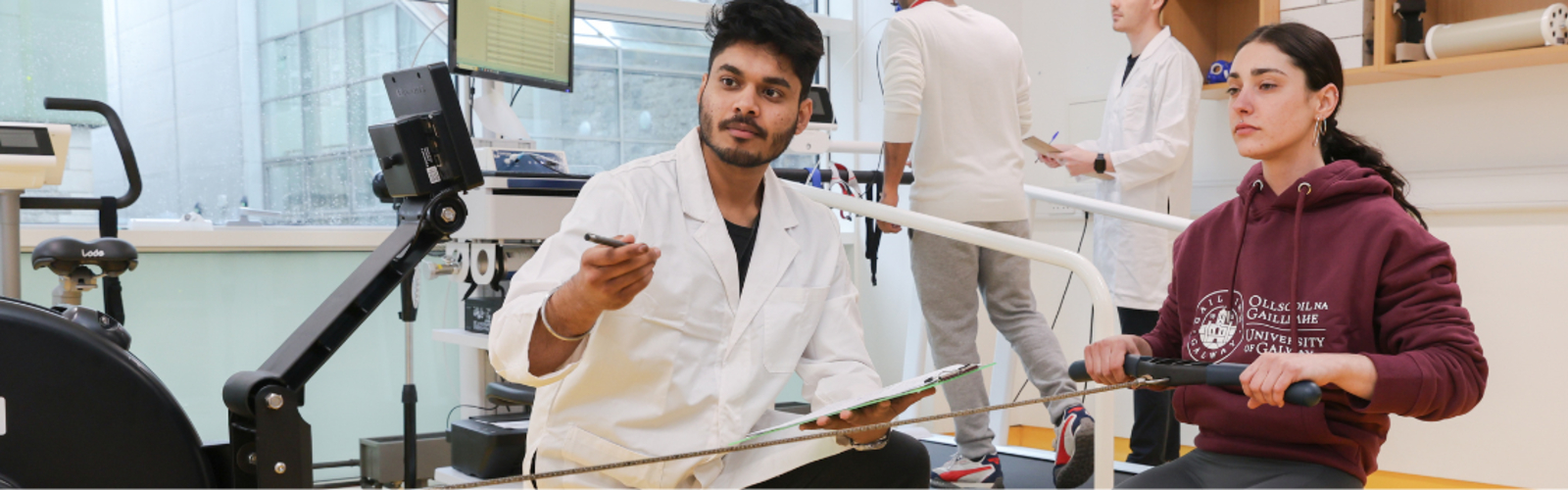
You will learn through lectures, practical laboratory sessions and workshops, led by staff with diverse physiological expertise. While lectures will provide you with a sound grounding in scientific principles and concepts of exercise physiology, practical sessions will give you hands-on opportunities to put that theory into practice.
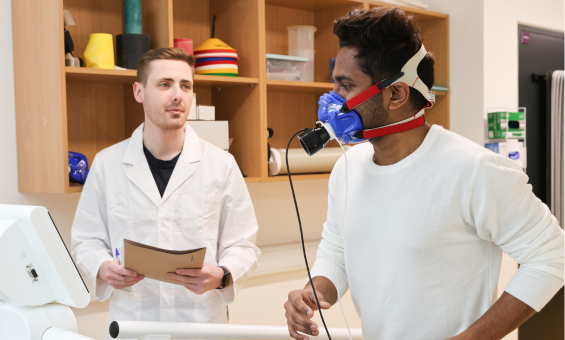
You will have access to modern technologies and equipment for the performance of fitness tests, assessment of cardiorespiratory function and musculoskeletal function, dietary analysis and development of exercise programmes.
As well as being expected to work independently, there will also be opportunities for group work, which will facilitate peer-to-peer learning, as well as the development of communication and problem-solving skills.
When you have learned the core concepts and methodologies, you will have an opportunity to take your learning to a higher level with the research project. This will develop your critical evaluation skills, as well as a range of project-specific practical skills in the area of exercise physiology. You will be expected to work collaboratively to take responsibility for the execution of the project, under the supervision of a staff member with relevant expertise. You will be required to synthesise a dissertation and to present your findings in an academic setting.
This course facilitates learners who are off-campus and studying remotely. Please note however that attendance on-campus will be required for practical activities and some assessments.
How Will I Be Assessed?
Throughout the programme, your progress will be assessed through various coursework and exams, including reports, presentations using various media, in-class tests, essay style exams, and a final dissertation.
- Continuous Assessment - Regular coursework, including laboratory reports, presentations, in-class tests. Students receive timely feedback on their submissions.
- Examinations - Written exams take place before Christmas and in May. Written exams evaluate understanding of concepts of exercise physiology, as well as ability to integrate between different sources of information.
- Research Project - Students will be assessed at different stages of the research project, where aspects of professional and research activity will be evaluated. You will be required to submit a dissertation, and to communicate and present your research findings.
Course queries:
E: physiology@universityofgalway.ie
T: +353 91 492761
Programme Directors:
Dr. Nicole Burns
E: nicole.burns@universityofgalway.ie
Dr. Louise Horrigan
E: louise.horrigan@universityofgalway.ie
Lecturers in Physiology, School of Pharmacy and Medical Sciences, College of Medicine, Nursing and Health Sciences.
Graduates of the MSc in Exercise Physiology and Its Application in Therapy will be able to:
- Perform a range of fitness tests and physiological assessments.
- Perform nutritional analysis, and understand the role of diet in exercise and performance, in health and disease.
- Critically evaluate information sources for evidence-based approaches for professional practice.
- Retrieve, evaluate and integrate information from peer-reviewed scientific publications.
- Collect and manage sensitive data according to GDPR and data privacy guidelines.
- Engage with clients/patients/research participants in a professional manner, in line with ethical guidelines.
- Perform data analysis and hypothesis testing using advanced statistical software.
- Plan, manage, and execute a substantial independent study project.
- Work independently and in a group to achieve performance indicators.
- Manage feedback and take appropriate actions for ongoing development and learning.
Accreditations & Awards
.png)


Meet our Employers
Entry Requirements and Fees
Minimum Entry Requirements
Students must have completed a bachelor’s degree (NFQ Level 8) in Science, Life Science, Biomedical Science, Health Sciences, Nursing or related discipline, with a minimum result of second-class honours (2.2). Adult learners seeking additional qualifications are also welcome. Work experience in a relevant area will be an advantage.
Academic entry requirements standardised per country are available here.
English Language Entry Requirements
For applicants whose first language is not English, an English language proficiency of IELTS score of 6.5 is required (with no less than 6.5 in Writing and no less than 6.0 in any other band) or equivalent.
More information on English language test equivalency are available here.
Supporting Documents
You will be required to provide supporting documentation as part of your application. You can check here what supporting documents are required for this course. In addition, you will be required to submit a C.V., to include contact details of 2 referees (at least one academic).
Interview
As part of the selection process, you may be required to attend for interview (online).
Garda Vetting
As this course may involve interactions with research participants and community groups, you may be required to undergo Garda vetting. Global students may also be required to provide a police clearance certificate (or equivalent).
You can apply online to the University of Galway application portal here.
Please review the entry requirements set out in the section above.
You will be required to upload supporting documentation to your application electronically. See the section above on entry requirements for further information on the supporting documentation required for this course.
Closing Dates
For this programme, there is no specific closing date for receipt of applications. Applications will be accepted on a rolling basis and course quotes will be reviewed continuously throughout the application cycle.
Notes
- You will need an active email account to use the website and you'll be guided through the system, step by step, until you complete the online form.
- Browse the FAQ's section for further guidance.
Fees for Academic Year 2026/27
| Course Type | Year | EU Tuition | Student Contribution | Non-EU Tuition | Levy | Total Fee | Total EU Fee | Total Non-EU Fee |
|---|---|---|---|---|---|---|---|---|
| Masters Full Time | 1 | €9,400 | €18,800 | €140 | €9,540 | €18,940 | ||
| Masters Part Time | 1 | €5,100 | €140 | €5,240 |
For 26/27 entrants, where the course duration is greater than 1 year, there is an inflationary increase approved of 1.8% per annum for continuing years fees.
Postgraduate students in receipt of a SUSI grant – please note an F4 grant is where SUSI will pay €4,500 towards your tuition (2026/27). You will be liable for the remainder of the total fee. A P1 grant is where SUSI will pay tuition up to a maximum of €6,270. SUSI will not cover the student levy of €140.
Note to non-EU students: learn about the 24-month Stayback Visa here.
Postgraduate Excellence Scholarships
This scholarship is valued at €1,500 for EU students applying for full-time taught master's postgraduate courses. You will be eligible if:
- You have been accepted to a full-time taught master's course at University of Galway,
- You have attained a first class honours (or equivalent) in a Level 8 primary degree.
An application for the scholarship scheme is required (separate to the application for a place on the programme). The application portal for 2026 is now open and available here. Applications will close on the 30th September 2026. Full details available here.
Global Scholarships
University of Galway offers a range of merit-based scholarships to students from a number of countries outside of the EU. Visit here for schemes currently available.
Sports Scholarships
Eligible students may apply for an Elite Sports Scholarship.
Application Process
Students applying for full time postgraduate programmes from outside of the European Union (EU), You can apply online to the University of Galway application portal here.
Our application portal opens on the 1st October each year for entry the following September.
Further Information
Please visit the postgraduate admissions webpage for further information on closing dates, documentation requirements, application fees and the application process.
Why University of Galway?
World renowned research led university nestled in the vibrant heart of Galway city on Ireland's scenic West Coast.
Downloads
Meet Our Alumni
Course Introduction
Exercise is Medicine
The MSc Exercise Physiology and Its Application in Therapy provides students with advanced knowledge and practical skills that they can use to pursue a career as an exercise physiologist. Students will learn to assess physiological fitness, and how to apply their understanding of physiological processes to develop exercise programmes in certain chronic disease conditions.
Programme Handbook