-
Courses

Courses
Choosing a course is one of the most important decisions you'll ever make! View our courses and see what our students and lecturers have to say about the courses you are interested in at the links below.
-
University Life

University Life
Each year more than 4,000 choose University of Galway as their University of choice. Find out what life at University of Galway is all about here.
-
About University of Galway

About University of Galway
Since 1845, University of Galway has been sharing the highest quality teaching and research with Ireland and the world. Find out what makes our University so special – from our distinguished history to the latest news and campus developments.
-
Colleges & Schools
Colleges & Schools
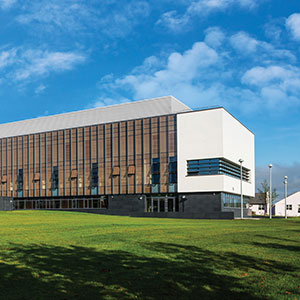
University of Galway has earned international recognition as a research-led university with a commitment to top quality teaching across a range of key areas of expertise.
-
Research & Innovation

Research & Innovation
University of Galway’s vibrant research community take on some of the most pressing challenges of our times.
-
Business & Industry
Guiding Breakthrough Research at University of Galway
We explore and facilitate commercial opportunities for the research community at University of Galway, as well as facilitating industry partnership.
-
Alumni & Friends
Alumni & Friends
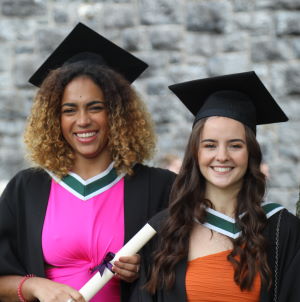
There are 128,000 University of Galway alumni worldwide. Stay connected to your alumni community! Join our social networks and update your details online.
-
Community Engagement
Community Engagement
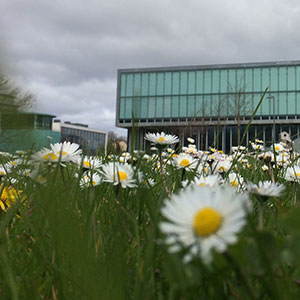
At University of Galway, we believe that the best learning takes place when you apply what you learn in a real world context. That's why many of our courses include work placements or community projects.
 Accessibility & Language
Childhood Speech, Language & Communication Needs (MSc)

MSc (Childhood Speech, Language & Communication Needs)
College of Medicine, Nursing & Health Sciences, School of Health Sciences- Title of Award
- Master of Arts
- Course Code
- MSC-SLCN
- Average Intake
- 20
- Delivery
- Blended Learning
- NFQ
- Level 9
- Award Type
- Major
- Next Intake
- Not running for 2026
- Duration
- 1 year, full-time | 2 years, part-time
- ECTS Weighting
- 90
Why Choose This Course?
Course Information
What will I study?
The programme is comprised of five core modules (compulsory) plus a minor dissertation. The core modules are:
- Advanced Research Methods
- Narratives in Childhood
- Using Evidence in Practice
- Cultural, Linguistic, & Social Diversity in Health & Education
- Supporting children with SLCN
- Dissertation (thesis) (year long)
Assessment is by continuous assessment in each module.
Modules:
Supporting Children with SLCN
Learning outcomes
On completion of this module, students will be able to:
- Discuss the impact which speech, language and communication needs can have across a range of contexts including individual and societal levels (e.g., ICF, Bronfenbrenner).
- Discuss the relationship between language and literacy and numeracy in the classroom.
- Critically appraise the policy context in relation to law/equality, health, and education as it relates to speech, language and communication intervention e.g., Disability Rights perspective, inclusive policies, New Language Curriculum, Early Childhood Curriculum Framework.
- Discuss the methods which are used to screen for speech and language needs (e.g., those used by teachers, SLTs, and psychologists).
- Interpret the results of assessments in order to identify strengths and needs.
- Discuss specific evidence-based intervention strategies to support children with SLCN in the classroom, clinic and community.
- Critically appraise service delivery options e.g., pull-out, classroom-based intervention, clinic-based intervention, whole-school approach, models of multi-professional working.
Cultural, Linguistic, and Social Diversity in Health and Education
Learning outcomes
At the end of the module, students will be able to:
- Critically appraise a range of theories and cultural beliefs about bilingual language acquisition, childhood, child rearing, health/illness, and disability that will impact on practice.
- Discuss the impact of parental addiction, neglect, poverty on child speech and language development and well-being.
- Apply knowledge and understanding to assessment and intervention of culturally, linguistically, and socially diverse families.
- Critically reflect upon their own cultural competence.
- Problem solve working with interpreters.
Using Evidence in Practice
Learning Outcomes
On successful completion of this module students should be able to:
- Describe the evidence based practice resources available which are relevant for practice in the clinic, classroom and community.
- Demonstrate proficiency in turning questions into effective search strategies.
- Appraise quantitative and qualitative research literature.
- Analyse and synthesise information from multiple sources to draw valid inferences about the state of knowledge in a particular field.
Narratives in childhood
Learning Outcomes
On successful completion of the module you will be able to:
- Discuss stages of narrative development in childhood.
- Discuss the characteristics of narrative associated with a range of clinical populations.
- Compare and contrast a range of elicitation and analysis procedures.
- Critically appraise a range of elicitation and analysis procedures.
- Critically evaluate a range of elicitation and analysis procedures.
- Discuss the available evidence base for narrative-based language interventions.
- Discuss cultural diversity in narratives and their clinical significance.
- Discuss the role of narrative in identity construction in childhood.
This MSc has been designed to facilitate your learning in developing the knowledge, skills, and attitudes for supporting children with developmental speech, language, and communication needs in clinic, classroom, and service contexts. There is currently no programme in Ireland with this specific interdisciplinary focus on the needs of children with speech, language and communication needs.
The course activities and skills training enable you to apply new knowledge and skills directly in the clinic, classroom, and community.
The blended delivery of online and face to face classes allows for flexible learning.
(Note: it does not lead to a professional qualification in speech and language therapy)
With our interprofessional MSc, you are gaining specialist knowledge of working with children with SLCN. You can then apply this knowledge in your specific professional context and future career.
This MSc can open doors to roles such as:
- Speech and Language Therapy Assistant
- SLCN Support Specialist
- Policy or Advocacy Roles
- Research Assistant / PhD Progression
We use innovative and creative teaching, learning, and assessment methods to facilitate students to link theory with practice.
The course involves 100% continuous assessment.
These include assignments, journal entries, contributions to discussion boards, and a monograph submission for the Minor Dissertation.
All elements of assessment must be passed.
The curriculum is designed to foster critical thinking, enabling students to apply theoretical principles to practice.
The teaching team are internationally recognized researchers and academics and implement research-led teaching and excellence in teaching and learning.
Programme Director(s):
Dr. Clare Carroll
T: +353 91 495 470
E: c.carroll@universityofgalway.ie
Dr. Mary-Pat O'Malley-Keighran
T: +353 91 495 470
E: marypat.omalley@universityofgalway.ie
Q: Does this course lead to a qualification in Speech and Language Therapy?
A: No, this course is not a pre-registration masters course. It is a taught masters course.
Q: What does blended learning mean?
A: There are weekly classes and weekly E-tivities to be completed online via the learning management system CANVAS. This means that you can complete activities in your own time.
Our classes are delivered weekly on campus (approximately two afternoons per week) and can be accessed remotely via a live video link. These classes are also recorded to enhance accessibility.
Accreditations & Awards
.png)


The flexible, blended learning style allowed me to apply what I was learning to clinical practice. The topics covered throughout the course equipped me with the skills necessary for working with children and families within Ireland’s ever-growing culturally diverse population.
Bríd McAndrew
Speech and Language Therapist

The MSc afforded me the opportunity to extend my knowledge in a wide range of areas and to increase my research capabilities and skills. The experience I gained through completing a research project allowed me allowed me to apply for funding to pursue a PhD. I was attracted to this Masters due to its small class size, the interactive practical based format of assignments and the opportunity to work and study with individuals from across the globe. I would highly recommending anyone to apply.
Saoirse Lally
Speech and Language Therapist

The mix of professions in the class cohort provided great opportunities for discovering other perspectives & learning from each other. The learning from the course has given me a new found confidence in supporting all children and families in my Montessori School.
Tara O’Donovan
Montessori School Owner and Manager
Meet our Employers
Entry Requirements and Fees
Minimum Entry Requirements
Primary degree with at least Second Class Honours or equivalent qualification.
Academic entry requirements standardised per country are available here.
English Language Entry Requirements
For applicants whose first language is not English, an English language proficiency of IELTS score of 6.5 is required (with no less than 6.5 in Writing and no less than 6.0 in any other band) or equivalent.
More information on English language test equivalency are available here.
Supporting Documents
You will be required to provide supporting documentation as part of your application. You can check here what supporting documents are required for this course.
You can apply online to the University of Galway application portal here.
Please review the entry requirements set out in the section above.
You will be required to upload supporting documentation to your application electronically. See the section above on entry requirements for further information on the supporting documentation required for this course.
Closing Dates
For this programme, 15th August 2026 is the closing date for receipt of applications.
Notes
- You will need an active email account to use the website and you'll be guided through the system, step by step, until you complete the online form.
- Browse the FAQ's section for further guidance.
Fees for Academic Year 2026/27
| Course Type | Year | EU Tuition | Student Contribution | Non-EU Tuition | Levy | Total Fee | Total EU Fee | Total Non-EU Fee |
|---|---|---|---|---|---|---|---|---|
| Masters Full Time | 1 | €8,400 | €17,800 | €140 | €8,540 | €17,940 | ||
| Masters Part Time | 1 | €4,350 | €140 | €4,490 |
For 26/27 entrants, where the course duration is greater than 1 year, there is an inflationary increase approved of 1.8% per annum for continuing years fees.
Postgraduate students in receipt of a SUSI grant – please note an F4 grant is where SUSI will pay €4,500 towards your tuition (2026/27). You will be liable for the remainder of the total fee. A P1 grant is where SUSI will pay tuition up to a maximum of €6,270. SUSI will not cover the student levy of €140.
Note to non-EU students: learn about the 24-month Stayback Visa here.
Postgraduate Excellence Scholarships
This scholarship is valued at €1,500 for EU students applying for full-time taught master's postgraduate courses. You will be eligible if:
- You have been accepted to a full-time taught master's course at University of Galway,
- You have attained a first class honours (or equivalent) in a Level 8 primary degree.
An application for the scholarship scheme is required (separate to the application for a place on the programme). The application portal for 2026 is now open and available here. Applications will close on the 30th September 2026. Full details available here.
Global Scholarships
University of Galway offers a range of merit-based scholarships to students from a number of countries outside of the EU. Visit here for schemes currently available.
Application Process
Students applying for full time postgraduate programmes from outside of the European Union (EU), You can apply online to the University of Galway application portal here.
Our application portal opens on the 1st October each year for entry the following September.
Further Information
Please visit the postgraduate admissions webpage for further information on closing dates, documentation requirements, application fees and the application process.
We encourage you read the following:
Glossary from Irish Assocation Speech and Language Therapists (IASLT) Position Paper on Developmental Language Disorder which you can access here:
Dr. Clare Carroll in conversation with Carmel Ferris about developmental language disorder:
https://universityofgalway.instructuremedia.com/embed/1d1c286f-0018-4207-889b-f17864ee8356
Supporting Talk Time - Classroom Strategies:ies
https://ncse.ie/wp-content/uploads/2022/11/Supporting-Talk-Time-Classroom-Strategies.pdf
Why University of Galway?
World renowned research led university nestled in the vibrant heart of Galway city on Ireland's scenic West Coast.
Contact the School of Health Sciences
Áras Moyola, Upper Newcastle, Galway


Downloads
Meet Our Alumni
Course Introduction
This programme has been paused and will not be enrolling in September 2026.
Understanding children with SLCN
The MSc in Childhood Speech, Language, and Communication Needs provides a critical and conceptually sophisticated understanding of children with SLCN and their lives. Our flexible blended learning approach combines face-to-face workshops (e.g., two days per module) and online learning to support you as a busy practitioner with many competing demands on your time.
SLCN Brochure